
Applications
Medical & Surgical
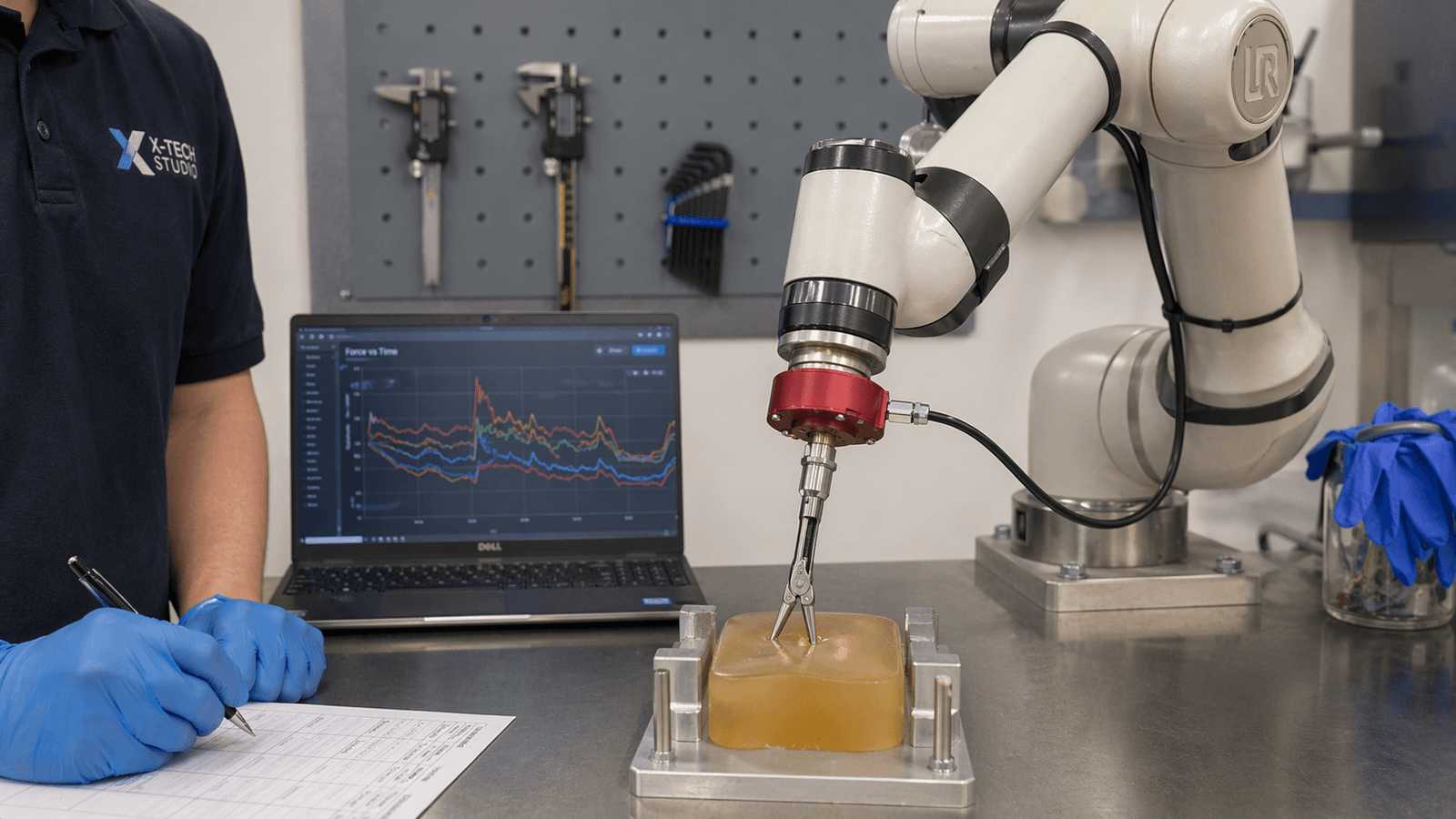
Haptic feedback, tissue interaction control, rehabilitation sensing, and instrument force characterization.
Instrument Testing and Research Sensing
Surgical instrument and rehabilitation device development programs measure insertion forces, grip actuation loads, and tip contact forces during bench validation. These forces often fall below 5 N and require sub-0.1 N resolution across all six axes simultaneously. The AXIOM-500 at 0.025 N Fx/Fy resolution and 500 Hz output rate captures force profiles that single-axis load cells miss, while 6-DOF measurement reveals off-axis loading that affects instrument fatigue life and user perception.
Haptic Feedback Platforms and Rehabilitation Research
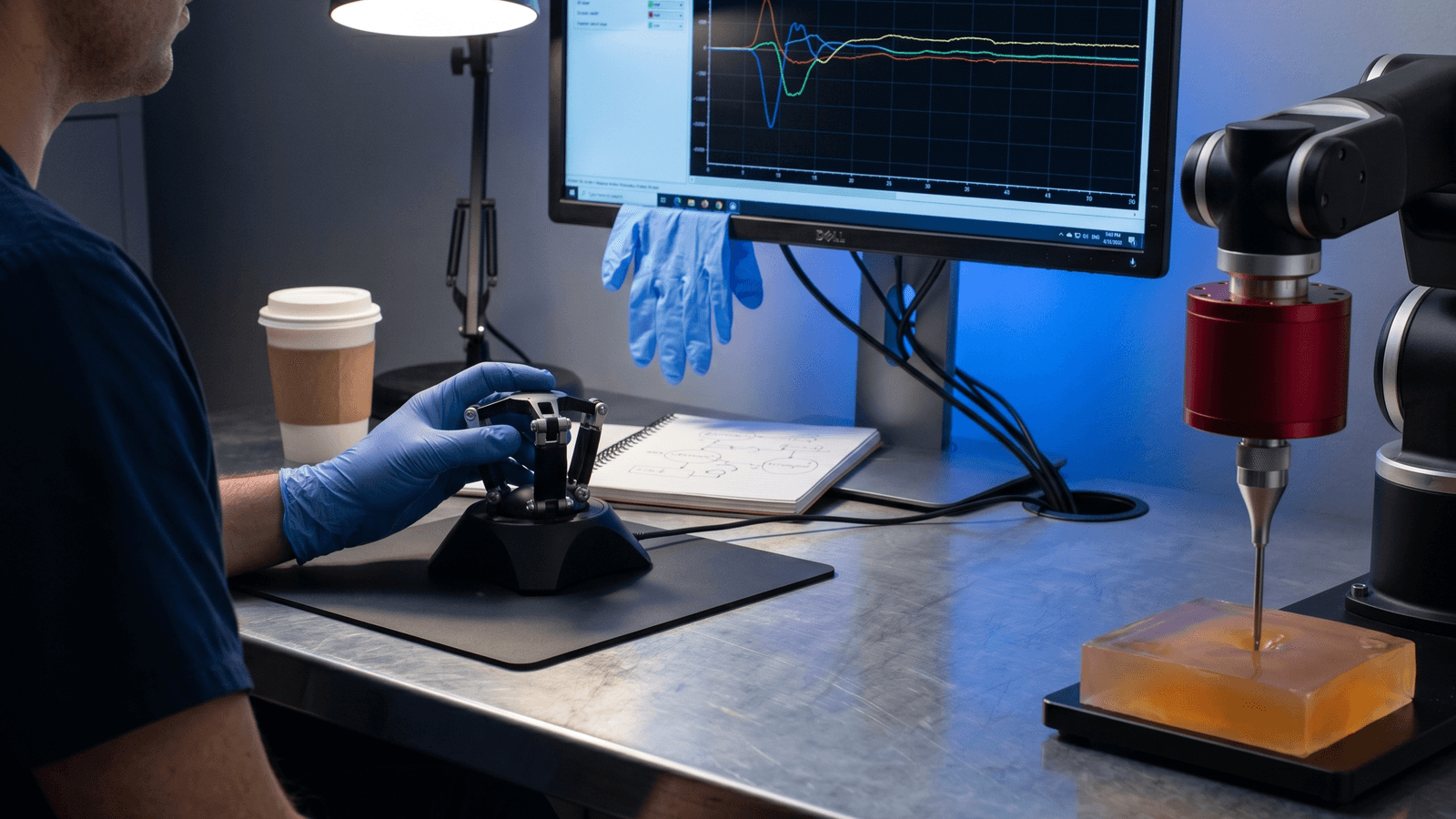
Haptic rendering requires low-latency, low-noise 6-axis data to feed vibrotactile or kinesthetic feedback actuators without introducing perceptible phase lag. Rehabilitation exoskeleton studies measure patient interaction forces to adapt assistance levels; the sensor must resolve the difference between voluntary patient effort and passive limb weight. AXIOM's 500 Hz output and single-cable RS-485 reduce integration complexity on platforms where every gram and wire count.
Key Metrics
0.025 N
Force Resolution (Fx/Fy, AXIOM-500)
500 Hz
Max Output Rate
6-DOF
Axes Measured
Challenges
- Instrument validation programs need repeatable multi-axis force data at sub-Newton resolution; most benchtop load cells are single-axis and cannot capture off-axis loading that affects fatigue and user perception.
- Haptic rendering feedback loops run at kHz rates on the actuator side; sensor latency and noise directly determine the fidelity of rendered tissue contact.
- Rehabilitation sensing must discriminate between voluntary patient effort and passive limb inertia — both of which appear at the sensor as force — requiring low noise and consistent calibration across sessions.
Outcomes
- 6-DOF force characterization at 0.025 N resolution replaces single-axis load cell rigs for instrument testing, capturing off-axis loading in one measurement pass.
- Low-noise 500 Hz streams feed haptic rendering and adaptive assistance controllers without additional signal conditioning hardware.
Recommended Products
Recommended
AXIOM-500Coming Soon
Compact, low-range 6-axis force-torque sensor for collaborative robotics and precision assembly.
Related
Research
Consistent, factory-calibrated 6-axis streams at 500 Hz with full cross-coupling compensation produce datasets where inter-run variance reflects the experiment, not the sensor.
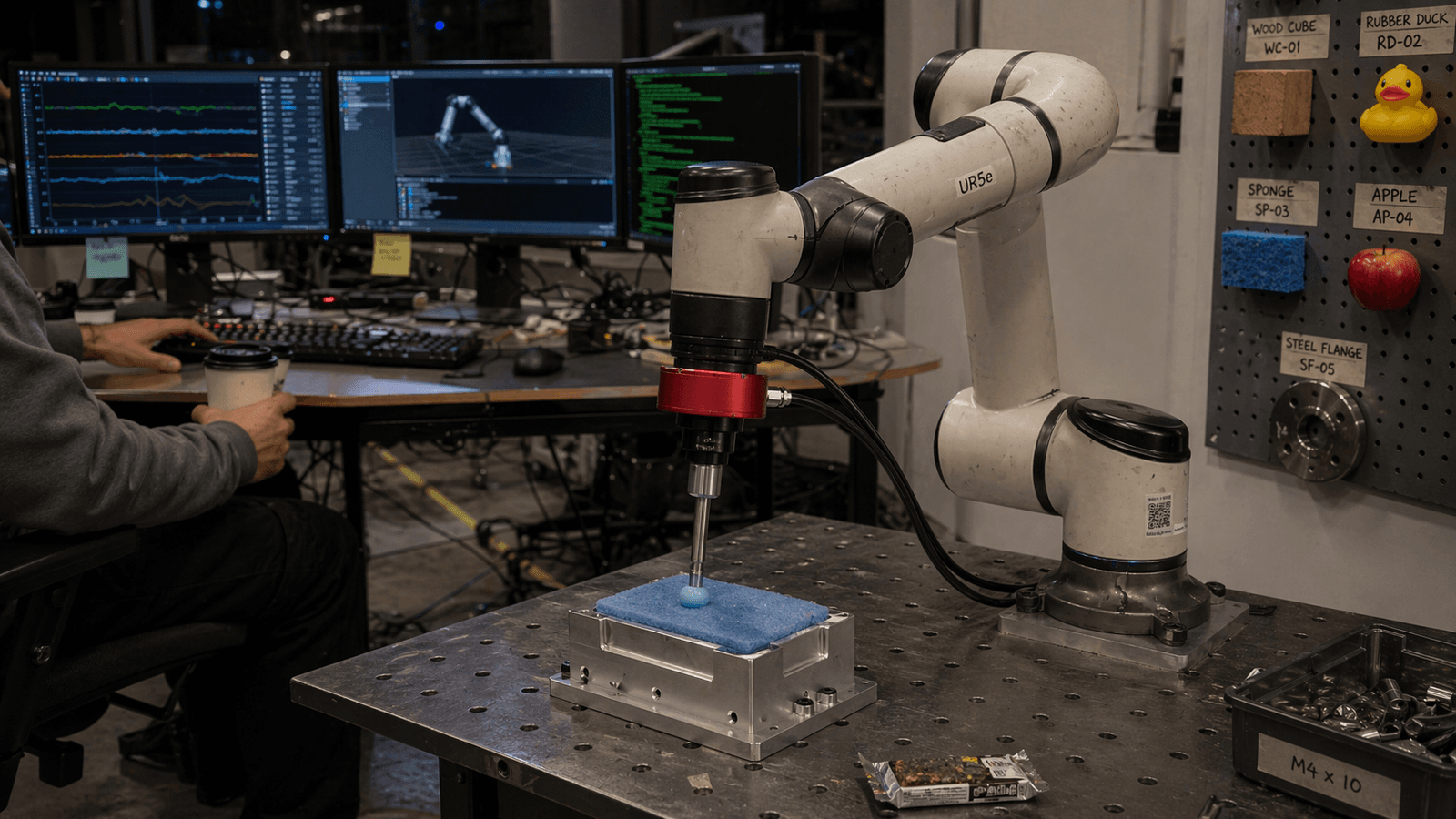
Tactile learning, biomechanics, material characterization, and robotic manipulation experiments.

Related
Humanoid Robotics
6-DOF sensing at 500 Hz in a 200 g package lets humanoid controllers close force loops fast enough to react to unexpected ground contact within a single control cycle.
Whole-body contact feedback, balance stabilization, and reactive manipulation for humanoid platforms.
Discuss Your Application
Share your requirements and environmental constraints for a tailored sensor recommendation.
Contact Us